Nuclear energy stands at a complex crossroads in the global energy debate. Often lauded as a powerful, low-carbon alternative to fossil fuels, it simultaneously faces scrutiny over safety concerns, waste disposal, and the potential for catastrophic accidents. This ultimate guide aims to cut through the noise, offering an in-depth, balanced perspective on whether nuclear energy is truly harmful to the environment, exploring its core principles, benefits, challenges, and its evolving role in achieving a sustainable future.
From the fundamental physics that power a reactor to the intricate systems designed to prevent disaster, we will delve into every facet of nuclear power’s environmental footprint. Understanding this complex energy source is crucial as nations worldwide grapple with climate change and the urgent need for reliable, clean power generation. By examining historical context, current technologies, and future innovations, we can better assess the true environmental impact and potential of nuclear energy.
Understanding Nuclear Energy: The Core Principles
To fully grasp the environmental implications of nuclear energy, it’s essential to first understand how it works. Nuclear power plants harness the energy released from nuclear fission, a process where the nucleus of a heavy atom, typically Uranium-235, is split into two or more smaller nuclei by a neutron. This splitting releases an enormous amount of energy, along with additional neutrons, which can then go on to split other uranium atoms, creating a self-sustaining chain reaction.
The Science Behind Fission and Energy Generation
In a nuclear reactor, this controlled chain reaction heats water, producing high-pressure steam. This steam then drives a turbine, which in turn spins a generator to produce electricity. This process is remarkably efficient; a small amount of uranium can produce an immense amount of energy, far exceeding the energy density of fossil fuels. The “why” behind this efficiency lies in Einstein’s famous equation, E=mc², demonstrating that mass can be converted into pure energy, and nuclear fission is a prime example of this conversion on a macroscopic scale.
Historical Context of Nuclear Power Development
The journey of nuclear power began in the mid-20th century, emerging from the scientific advancements of the Manhattan Project. The first commercial nuclear power plant, Obninsk, began operation in the Soviet Union in 1954, followed shortly by Shippingport in the United States in 1957. The initial promise was of “electricity too cheap to meter,” driven by a desire for energy independence and technological progress. Over the decades, the industry has evolved significantly, with continuous improvements in reactor design, safety protocols, and operational procedures, learning crucial lessons from incidents like Three Mile Island, Chernobyl, and Fukushima.

The Environmental Benefits of Nuclear Power
One of the most compelling arguments for nuclear energy is its significant environmental advantages, particularly in the context of climate change mitigation. Unlike power generation from fossil fuels, nuclear power plants do not emit greenhouse gases (GHGs) during operation, making them a crucial tool in the fight against global warming.
Virtually Zero Carbon Emissions During Operation
The primary benefit of nuclear energy is its near-zero carbon dioxide emissions during electricity generation. The process of nuclear fission itself does not produce CO2, sulfur dioxide, or nitrogen oxides, which are major contributors to air pollution, acid rain, and the greenhouse effect. While the construction of plants and the mining of uranium do involve some emissions, the lifecycle carbon footprint of nuclear power is comparable to, or even lower than, many renewable energy sources like solar and wind, especially when considering the intermittency and material intensity of renewables.
Detailed Analysis: Lifecycle Emissions
A lifecycle assessment (LCA) considers all emissions from cradle to grave. For nuclear energy, this includes:
- Uranium Mining and Milling: Energy-intensive processes, some emissions.
- Fuel Fabrication: Converting uranium into fuel rods.
- Plant Construction: Cement, steel, transport.
- Plant Operation: Virtually zero direct emissions.
- Decommissioning: Dismantling facilities.
- Waste Management: Transport and storage.
Despite these upstream and downstream activities, numerous studies, including those by the IPCC, consistently rank nuclear power among the lowest-carbon electricity generation methods.
High Power Output and Land Use Efficiency
Nuclear power plants are incredibly efficient in terms of land use. A typical nuclear power plant can generate electricity for millions of homes on a relatively small footprint compared to solar farms or wind turbine installations that require vast tracts of land to produce equivalent amounts of power. This high power density makes nuclear an attractive option for regions with limited land availability or those seeking to preserve natural landscapes.
Reliability and Baseload Power Generation
Unlike intermittent renewable sources like solar and wind, nuclear power plants can operate 24/7, providing stable, reliable baseload electricity to the grid. This constant output is critical for maintaining grid stability and ensuring a consistent power supply, reducing reliance on fossil fuel “peaker” plants that often fill gaps when renewables are not generating. This reliability is a key “why” for its continued consideration in energy portfolios.

Addressing the Environmental Challenges of Nuclear Energy
Despite its significant benefits, nuclear energy is not without its environmental challenges. Public concern often centers around nuclear waste, the risk of accidents, and the impacts of uranium mining. A comprehensive understanding requires acknowledging and addressing these concerns head-on.
Nuclear Waste Management: A Long-Term Challenge
The most persistent and often cited environmental concern is the management of radioactive waste. Spent nuclear fuel remains radioactive for thousands of years, posing a significant long-term disposal challenge. There are different categories of waste:
- High-Level Waste (HLW): Primarily spent fuel rods, highly radioactive and requires deep geological repositories.
- Low-Level Waste (LLW): Contaminated protective clothing, tools, etc., less radioactive, disposed of in near-surface facilities.
- Intermediate-Level Waste (ILW): Reactor components, chemical sludge, requiring more robust containment than LLW.
Detailed Procedure: Waste Disposal and Reprocessing
Current strategies for HLW involve vitrification (encasing in glass) and storage in deep geological repositories, designed to isolate the waste from the biosphere for millennia. Countries like Finland and Sweden are leading the way in developing operational deep geological repositories (e.g., Onkalo). Reprocessing, an alternative approach, chemically separates reusable uranium and plutonium from spent fuel, reducing the volume of HLW and enabling further energy extraction. However, reprocessing is costly and raises proliferation concerns.
Common Pitfalls: Public opposition, political hurdles, and the immense timescale for safe storage are significant challenges in developing and implementing long-term waste solutions.
Accident Risk and Safety Protocols
The potential for severe accidents, though rare, is a major concern. Events like Chernobyl (1986) and Fukushima Daiichi (2011) have profoundly impacted public perception. These incidents led to widespread contamination and long-term displacement of populations, highlighting the catastrophic potential when safety systems fail or are overwhelmed.
Modern Safety Protocols and Technologies:
- Defense-in-Depth: Multiple layers of safety systems and barriers.
- Redundant Systems: Duplication of critical components to ensure functionality.
- Passive Safety Systems: Designs that rely on natural forces (e.g., gravity, natural circulation) rather than active components, requiring no human intervention or external power in an emergency.
- Enhanced Containment Structures: Robust buildings designed to withstand severe internal and external events.
- Stringent Regulatory Oversight: Independent bodies enforcing strict safety standards and inspections.
The “why” behind these stringent measures is to minimize the probability of failure to an extremely low level, making modern reactors significantly safer than their predecessors.
Thermal Pollution and Water Use
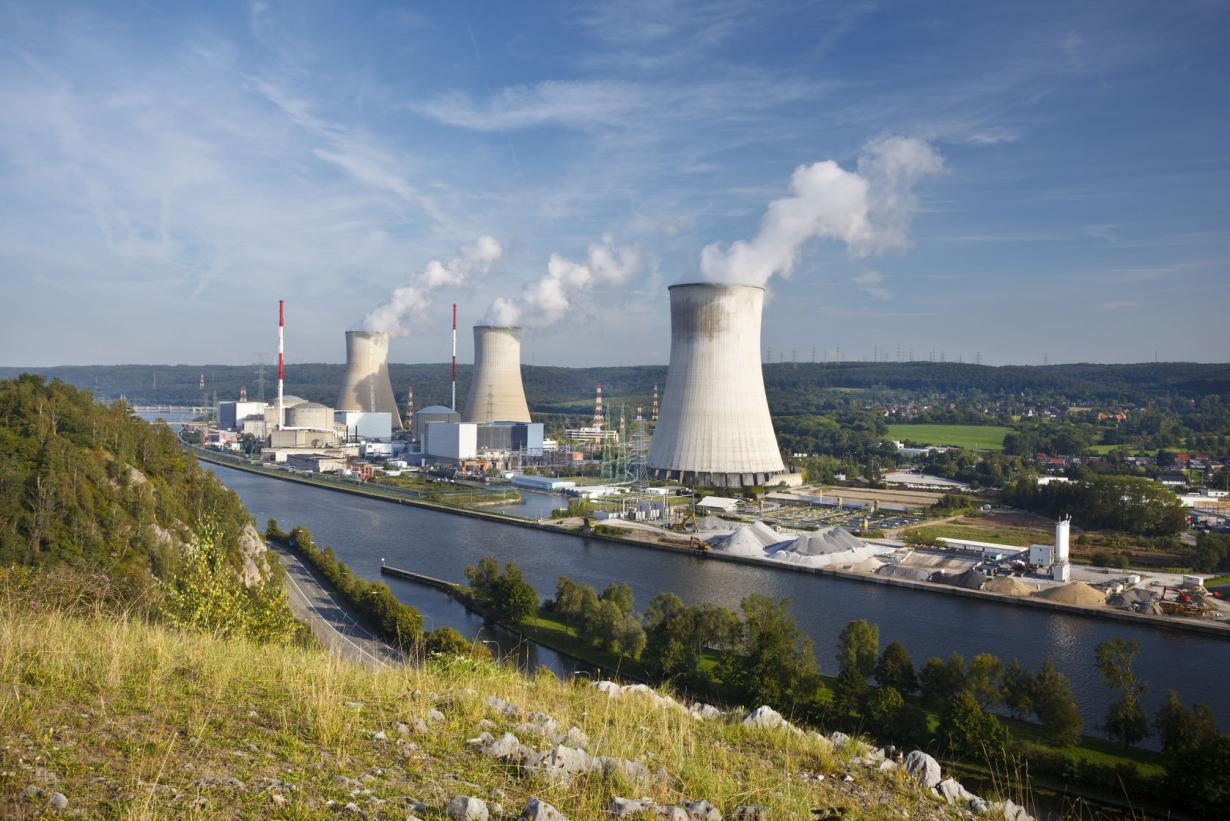
Nuclear power plants require vast amounts of water for cooling their reactors and condensers. This water, often drawn from rivers, lakes, or the ocean, is returned at a higher temperature, leading to “thermal pollution.”
Impact on Aquatic Ecosystems: Heated water can reduce oxygen levels, stress aquatic organisms, and alter local biodiversity. Cooling Methods:
- Once-Through Cooling: Water is drawn, used, and returned directly.
- Cooling Towers: Evaporate a portion of the water to dissipate heat into the atmosphere, reducing thermal discharge but increasing water consumption.
- Closed-Loop Systems: Minimize water intake and discharge but can still have evaporative losses.
While thermal pollution is a localized issue, it requires careful management and regulatory limits to mitigate ecological damage.
Uranium Mining and Processing Impacts
The initial stages of the nuclear fuel cycle, uranium mining and milling, also carry environmental costs. These activities can lead to:
- Habitat Destruction: Open-pit mining can disrupt landscapes.
- Tailings Piles: Radioactive waste rock and residues can contaminate soil and water if not properly managed.
- Water Contamination: Acid mine drainage can release heavy metals and radionuclides.
Strict environmental regulations and rehabilitation efforts are crucial to minimize these impacts, but they remain a consideration in the overall environmental footprint.

Innovations & The Future of Nuclear Energy
The nuclear industry is not stagnant; significant innovations are underway to address current challenges and enhance its role in future energy landscapes. These advancements aim to improve safety, reduce waste, increase efficiency, and lower costs.
Advanced Reactor Designs and Small Modular Reactors (SMRs)
A major area of innovation is in advanced reactor designs. These include Generation IV reactors, which promise enhanced safety, reduced waste, and even the ability to consume existing nuclear waste as fuel. Examples include molten salt reactors, fast neutron reactors, and high-temperature gas reactors.
Small Modular Reactors (SMRs): SMRs represent a paradigm shift. These are smaller, factory-built reactors that can be deployed more quickly and affordably. Their modular design allows for economies of scale in manufacturing and offers greater flexibility in siting, potentially bringing nuclear power to remote areas or industrial sites. SMRs often incorporate advanced passive safety features, further reducing accident risk and simplifying operation.
The Promise of Nuclear Fusion
Beyond fission, nuclear fusion holds the ultimate promise of clean, virtually limitless energy. Fusion power mimics the process that powers the sun, combining light atomic nuclei (typically isotopes of hydrogen) to release vast amounts of energy. Unlike fission, fusion produces no long-lived radioactive waste and carries no risk of meltdown. Projects like ITER (International Thermonuclear Experimental Reactor) are at the forefront of fusion research, though commercial viability is still decades away.
Nuclear Energy’s Role in Climate Change Mitigation
As the urgency of climate change grows, nuclear energy is increasingly recognized as a vital component of a diversified, low-carbon energy portfolio. Its ability to provide consistent, large-scale, carbon-free power makes it an indispensable partner for intermittent renewables, ensuring grid stability and accelerating the transition away from fossil fuels. The “why” for its future role is clear: it offers a proven, scalable technology to significantly reduce greenhouse gas emissions.
Pro Tips for Sustainable Nuclear Development
To ensure nuclear energy contributes positively to environmental goals, several best practices and strategic considerations are paramount:
- Prioritize Advanced Reactor Deployment: Focus on designs with enhanced safety, waste reduction, and fuel efficiency.
- Invest in Robust Waste Solutions: Accelerate the development and implementation of permanent, deep geological repositories and explore advanced reprocessing technologies.
- Strengthen International Safety Standards: Continuous improvement and harmonization of global safety protocols are essential to prevent future accidents.
- Foster Public Engagement and Transparency: Open dialogue and clear communication about risks, benefits, and safety measures are crucial for public acceptance.
- Integrate with Renewable Energy: Utilize nuclear power as a stable baseload provider to complement and enable the expansion of intermittent renewable sources.
- Support Research in Fusion Technology: Long-term investment in fusion research offers the potential for a truly sustainable energy future.
Nuclear Energy’s Role in a Diverse Grid
Understanding where nuclear energy fits into a broader energy strategy requires comparing its attributes with other major power sources. This comparison highlights its unique advantages and challenges.
Technical Checklist: Key Considerations for Energy Source Selection
- Carbon Footprint: How much CO2 equivalent is emitted over the entire lifecycle?
- Reliability/Dispatchability: Can the power source be turned on/off or adjusted as needed?
- Energy Density: How much energy can be generated per unit of fuel or land area?
- Waste Byproducts: What waste is produced, and how is it managed?
- Safety Profile: What are the risks associated with operation and maintenance?
- Cost: Capital expenditure, operational costs, and fuel costs.
| Feature | Nuclear Power | Solar PV | Wind Power | Coal Power |
|---|---|---|---|---|
| Carbon Emissions (Lifecycle) | Very Low | Very Low | Very Low | Very High |
| Reliability (Baseload) | High (24/7) | Intermittent | Intermittent | High (Dispatchable) |
| Land Use Efficiency | Very High | Moderate to Low | Moderate to Low | Moderate |
| Waste Byproducts | High-level radioactive waste (small volume) | Electronic waste, material disposal | Blade composites, material disposal | Ash, CO2, SOx, NOx |
| Accident Risk | Low probability, high consequence | Very Low | Very Low | Chronic pollution, mining accidents |
| Fuel Source | Uranium | Sunlight | Wind | Coal |
Frequently Asked Questions (FAQ)
- Is nuclear energy considered a clean energy source?
- Yes, during operation, nuclear power plants produce virtually no greenhouse gas emissions or air pollutants, making it a clean energy source in terms of air quality and climate impact. While upstream (mining) and downstream (waste disposal) activities have some environmental footprint, its lifecycle emissions are among the lowest of all energy sources.
- How dangerous is nuclear waste, and how is it managed?
- Nuclear waste, particularly high-level spent fuel, is highly radioactive and remains so for thousands of years, posing a long-term hazard. It is managed through a multi-barrier approach: spent fuel is stored in robust, shielded containers, often initially in cooling pools and then in dry casks. The ultimate plan for high-level waste involves deep geological repositories, designed to isolate it safely from the environment for millennia. Reprocessing can also reduce waste volume and extract more energy.
- What are the risks of a nuclear power plant meltdown?
- The risk of a catastrophic meltdown in modern nuclear power plants is extremely low due to stringent safety regulations, redundant safety systems, and passive safety features designed to prevent such events. While incidents like Chernobyl and Fukushima highlight the potential for severe consequences, they have also driven significant advancements in reactor design and operational protocols, making new plants considerably safer.
- Does nuclear energy contribute to global warming?
- No, nuclear energy does not directly contribute to global warming. Its operational phase emits no carbon dioxide or other greenhouse gases. By providing a reliable, large-scale source of electricity, nuclear power helps displace fossil fuel-fired power generation, thereby playing a crucial role in reducing overall greenhouse gas emissions and mitigating climate change.
- How does nuclear energy compare to renewable energy sources like solar and wind?
- Nuclear energy, solar, and wind are all low-carbon energy sources. Nuclear offers high power density and reliable baseload power, operating 24/7 independently of weather conditions. Solar and wind are intermittent, requiring energy storage or backup power. Each has different land use requirements, waste profiles, and capital costs. A balanced energy portfolio often includes a mix of these sources to ensure both sustainability and grid stability.
Reader boundary: This guide is for general editorial information only. Diving, marine-wildlife, environmental, lighting, electrical, appliance, plant-care, and home-installation topics should be checked against current standards, manufacturer instructions, local rules, and qualified professionals before practical use.