The Masters of Benthic Survival: Clams and Groupers
The benthic zone, or the ecological region at the lowest level of a body of water, presents a grueling environment characterized by immense pressure, fluctuating food availability, and constant predatory threats. To conquer this terrain, creatures like clams and groupers have evolved diametrically opposed, yet equally successful, survival strategies. While clams rely on profound defensive adaptations and efficient resource utilization, groupers dominate through sheer physical prowess and ecological engineering.
The Secret Life of Clams: Burrowing and Bivalve Mechanics
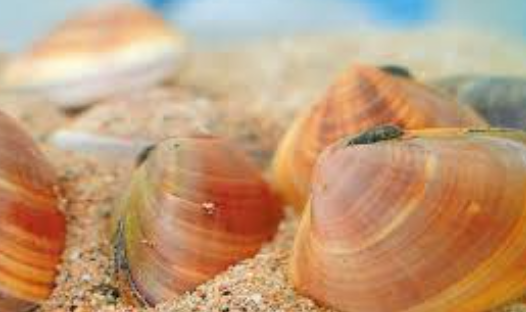
Clams are far more complex than their stationary, hard-shelled exterior suggests. These bivalve mollusks are master engineers of the ocean floor. Survival in shifting sands requires an exceptional anchoring system. Clams utilize a highly muscular appendage known as a “foot,” which they extend into the substrate. By pumping blood into this foot, it swells to act as an anchor. The clam then violently contracts the muscle, pulling its entire body downward into the protective embrace of the sand or mud. This rapid burrowing mechanism is a vital defense against bottom-dwelling predators like rays and certain species of fish.
Furthermore, their feeding mechanism is a marvel of evolutionary efficiency. Clams are filter feeders, equipped with a specialized siphon system. They extend an incurrent siphon to draw in water laden with phytoplankton, microscopic organic matter, and oxygen. The water passes over highly vascularized gills covered in mucus, which trap the food particles. Tiny hair-like structures called cilia then transport the food to the clam’s mouth. Finally, an excurrent siphon expels the filtered water and waste. This continuous filtration not only sustains the clam but also plays a critical role in maintaining the clarity and health of the surrounding marine ecosystem.
The Ecological Wonder of the Grouper: The Seabed King
In stark contrast to the unassuming clam, the grouper reigns as a formidable apex predator of the coral reefs and rocky seabeds. Groupers are robust, heavy-bodied fishes characterized by large mouths and powerful jaws. Unlike pelagic hunters that rely on sustained speed, groupers are ambush predators. They utilize the complex topography of the seabed—caves, crevices, and coral overhangs—to conceal their massive frames. When an unsuspecting prey item, such as a crustacean or a smaller fish, ventures too close, the grouper executes a lightning-fast strike.
The mechanics of a grouper’s strike are rooted in the physics of suction feeding. By rapidly opening its enormous mouth and expanding its gill covers, the grouper creates a sudden, massive pressure differential. This generates a powerful vacuum that literally inhales the prey along with a large volume of water. Groupers also exhibit fascinating ecological behaviors, such as cooperative hunting. Research has shown that certain species of groupers will use specific body signals to recruit moray eels or octopuses to flush out prey hidden deep within narrow reef crevices. This interspecies cooperation highlights the high level of intelligence and complex social dynamics present in benthic ecosystems.

Deep-Sea Predators: Moray Eels and the Climate Challenge
The intricate labyrinth of coral reefs and deep-sea rocky outcroppings serves as the perfect hunting ground for one of the ocean’s most specialized predators: the moray eel. Characterized by their serpentine bodies and intimidating, perpetually open jaws, moray eels are highly adapted to a life of crevice-dwelling and nocturnal hunting. However, these ancient survivors are currently facing unprecedented challenges driven by rapid environmental shifts.
Pharyngeal Jaws: The Ultimate Hunting Adaptation
The moray eel’s most astonishing anatomical feature is undoubtedly its pharyngeal jaws. While most predatory fish use suction to draw prey into their throats, the moray eel’s narrow habitat restricts the rapid expansion of the cranial cavity required for such a mechanism. Evolution provided a terrifyingly efficient alternative. Located deep within the eel’s throat is a second set of jaws, complete with sharp, recurved teeth.
When a moray eel strikes, its primary oral jaws clamp down on the prey. Immediately, the pharyngeal jaws lunge forward from the throat, grasp the struggling victim, and forcefully drag it down into the esophagus. This dual-jaw system ensures that once a prey item is caught, escape is virtually impossible. This adaptation allows morays to consume surprisingly large prey relative to their head size, making them highly efficient apex predators in their micro-habitats.
The Impact of a Changing Climate on Deep-Sea Hunters
Despite their evolutionary perfection, moray eels are highly susceptible to the cascading effects of global climate change. The warming of ocean waters and the insidious process of ocean acidification pose dire threats to the delicate reef ecosystems that morays call home. As coral bleaching events become more frequent and severe, the structural complexity of the reefs deteriorates. This loss of habitat directly impacts the moray eel in several critical ways.
- Habitat Degradation: The collapse of coral structures eliminates the intricate network of crevices and caves that moray eels require for ambush hunting and protection from larger predators.
- Prey Scarcity: As reefs die, the populations of small reef fishes and invertebrates—the primary food source for moray eels—plummet, leading to intense resource competition and starvation.
- Physiological Stress: Rising ocean temperatures can disrupt the eel’s metabolic rates, affecting their reproductive cycles and overall physiological health, pushing these resilient creatures to their biological limits.

The Art of Regeneration: Sea Cucumbers and Starfish
In the unforgiving environment of the ocean, the ability to recover from severe physical trauma is a superpower. Echinoderms, a phylum of marine invertebrates that includes sea cucumbers and starfish, possess some of the most extraordinary regenerative capabilities observed in the animal kingdom. These creatures challenge our fundamental understanding of biology, demonstrating a mastery over cellular reprogramming and tissue reconstruction.
Soft Wonders: The Transformation of Sea Cucumbers
Sea cucumbers appear as simple, leathery, sausage-shaped creatures slowly scavenging the ocean floor, yet they harbor incredible defensive and regenerative secrets. When threatened by a predator, such as a crab or a sea turtle, some species of sea cucumbers execute a drastic and visually shocking defense mechanism known as evisceration. They violently expel their own internal organs—including their respiratory tree, digestive tract, and gonads—through their anus to distract and entangle the attacker.
What follows is a true biological marvel. The sea cucumber does not die from this massive loss of vital organs. Instead, it enters a phase of rapid cellular regeneration. Specialized cells within the sea cucumber’s coelomic cavity migrate to the sites of tissue loss and begin to differentiate, rebuilding the entire digestive and respiratory systems from scratch. Within a matter of weeks, the sea cucumber is fully functional again. Furthermore, their bodies contain mutable collagenous tissue, allowing them to literally liquefy their bodies to squeeze through tiny rock fissures, only to solidify again once safe.
Nature’s Master of Resurrection: The Starfish
Starfish (or sea stars) are perhaps the most famous icons of regeneration. Unlike most animals that form scar tissue over a severed limb, a starfish can completely regrow a lost arm, complete with complex structures like tube feet, an eyespot, and portions of its digestive system. This process is driven by the migration of stem cells to the site of the injury, forming a blastema—a mass of undifferentiated cells capable of growing into any required tissue type.
The extent of a starfish’s regenerative power depends heavily on its central disc. If a starfish is cut in half, as long as each half retains a portion of the central nerve ring and vital organs located in the central disc, both halves can regenerate into two entirely separate, fully formed starfish. This incredible ability not only serves as a defense mechanism against predation but also functions as a method of asexual reproduction in certain species, ensuring the proliferation of their genetic lineage even in the face of catastrophic physical damage.

Symbiosis and Traps: Sea Anemones and Clownfish
The ocean is rife with complex relationships, but few are as iconic and biologically fascinating as the mutualistic symbiosis between the sea anemone and the clownfish. This partnership is built upon a foundation of deadly traps, chemical camouflage, and mutual survival benefits, showcasing the intricate balance of marine ecosystems.
The Underwater Trap Master: Sea Anemone Feeding Mechanisms
To understand the miracle of this symbiosis, one must first understand the lethal nature of the sea anemone. Despite their floral appearance, sea anemones are predatory animals related to jellyfish and corals. Their flowing tentacles are armed with thousands of microscopic, harpoon-like stinging cells called nematocysts. These cells are triggered by mechanical touch or chemical cues from passing prey.
When a small fish or crustacean brushes against the tentacles, the nematocysts fire in milliseconds, injecting a potent cocktail of neurotoxins that paralyze the victim. The anemone then uses its tentacles to draw the paralyzed prey into its central mouth for digestion. It is a highly efficient, indiscriminate killing mechanism that makes the anemone’s immediate vicinity a death zone for most small marine life.
The Clownfish’s Safe Haven
How, then, does the brightly colored clownfish dart freely through these venomous tentacles without being stung to death? The secret lies in a highly specialized, biologically engineered mucus coat. While all fish possess a protective slime layer, the clownfish’s mucus is uniquely devoid of the specific chemical compounds that trigger the anemone’s nematocysts to fire. Essentially, the anemone’s tactile receptors do not register the clownfish as food or a threat; they simply do not recognize it as biological matter at all.
This relationship is strictly mutualistic, meaning both parties derive significant survival benefits. The clownfish gains an impenetrable fortress; predators dare not pursue them into the venomous embrace of the anemone. In return, the highly active clownfish provides several services to its host.
- Nutrient Cycling: The clownfish’s waste provides essential nitrogen and phosphorus to the symbiotic algae (zooxanthellae) living within the anemone’s tissues, boosting the anemone’s energy production.
- Parasite Removal: Clownfish actively clean the anemone by consuming dead tissue and picking off harmful parasites.
- Water Circulation: The constant swimming motion of the clownfish helps aerate the water around the anemone, ensuring a steady flow of oxygen and removing metabolic waste.

Masters of Camouflage and Disguise: Spider Crabs and Octopuses
In the deep ocean, visibility can be a death sentence. The evolutionary arms race between predator and prey has given rise to some of the most sophisticated camouflage and disguise techniques on the planet. The spider crab and the octopus represent two distinct, yet highly effective, approaches to becoming invisible: physical decoration and dynamic physiological shape-shifting.
The Spider Crab: The Ocean’s Long-Legged Decorator
The spider crab, possessing a teardrop-shaped carapace and exceptionally long, spindly legs, relies on a behavioral adaptation known as “decorating” to evade the keen eyes of predatory fish and larger crustaceans. Unlike animals that naturally blend into their background, the spider crab actively constructs its own camouflage.
These crabs are equipped with specialized, hook-like setae (bristles) covering their shells. Using their dexterous pincers, spider crabs meticulously snip pieces of algae, sponges, seaweeds, and even small sedentary animals like anemones or bryozoans from their surroundings. They then chew the ends of these materials to create a sticky secretion and attach them to the hooks on their bodies. Over time, the crab becomes a walking, living piece of the reef. This disguise is so effective that even trained marine biologists often struggle to spot a fully decorated spider crab resting among the flora.
The Intelligent World of Octopuses: Mysterious Brains and Disguise
While the spider crab uses physical props, the octopus utilizes a hyper-advanced neurological and physiological system to achieve instant, dynamic camouflage. Octopuses are widely considered the most intelligent invertebrates on Earth, possessing a massive, highly complex nervous system. Fascinatingly, up to two-thirds of an octopus’s neurons are distributed throughout its eight arms, allowing each arm to process information and react to the environment semi-autonomously.
Their mastery of disguise is facilitated by millions of specialized skin cells called chromatophores, iridophores, and leucophores. Chromatophores contain sacs of pigment (black, brown, orange, red, or yellow) attached to tiny radial muscles. By expanding or contracting these muscles, the octopus can change its skin color and pattern in milliseconds. Iridophores reflect ambient light to create iridescent greens and blues, while leucophores provide a white background that enhances the contrast of the other colors.
Beyond color, octopuses can also alter their physical texture. Specialized muscular structures called papillae can be raised or lowered to mimic the rough texture of coral, the smooth surface of a rock, or the spiky appearance of seaweed. This combination of instantaneous color, pattern, and texture matching makes the octopus the undisputed master of optical illusion in the marine world.

Deadly Signals and Bioluminescence: Blue-Ringed Octopuses and Jellyfish
Communication in the ocean takes many forms. While some creatures strive for invisibility, others broadcast their presence using vibrant, unmissable signals. The brilliant colors of the blue-ringed octopus and the ethereal glow of the jellyfish serve completely different ecological purposes—one is a stark warning of lethal toxicity, while the other is a complex tool for survival and predation.
The Dangerous Signal of the Blue-Ringed Octopus
The blue-ringed octopus is a diminutive creature, often no larger than a golf ball, yet it holds the title of one of the deadliest marine animals on Earth. Typically, this octopus exhibits a dull, yellowish-brown coloration that allows it to blend seamlessly into tide pools and shallow coral reefs. However, when agitated or threatened, it rapidly undergoes a terrifying transformation.
Dozens of iridescent blue rings suddenly flash across its body, pulsating with vibrant intensity against a darkened background. This is a classic example of aposematism—a biological warning system. The bright colors scream to potential predators: “I am highly toxic; do not eat me.” The venom of the blue-ringed octopus contains tetrodotoxin, a potent neurotoxin produced by symbiotic bacteria in its salivary glands. Tetrodotoxin blocks sodium channels in the nervous system, causing rapid motor paralysis and respiratory arrest within minutes. There is no known antivenom, making the flashing blue rings a warning that must be universally respected in the animal kingdom.
Jellyfish: The True Magicians of the Ocean
Jellyfish are ancient, brainless, and heartless organisms that have drifted through the world’s oceans for over 500 million years. Despite their anatomical simplicity, they are true magicians of biological engineering, particularly when it comes to their locomotion and their ability to produce light.
Jellyfish swim using a highly efficient method of jet propulsion. By contracting the muscular bell of their body, they force water out, propelling themselves forward. The subsequent relaxation of the bell creates a vortex that pushes them even further, making them one of the most energy-efficient swimmers in the sea.
However, their most enchanting trait is bioluminescence. Many deep-sea jellyfish possess the ability to generate their own light through a chemical reaction involving a light-emitting molecule called luciferin and an enzyme called luciferase. In some species, this process is enhanced by the Green Fluorescent Protein (GFP). Bioluminescence serves multiple critical functions in the pitch-black depths of the ocean:
| Function | Mechanism | Ecological Purpose |
|---|---|---|
| Predator Deterrence | Sudden, bright flashes of light upon physical contact. | Startles predators, giving the jellyfish a brief window to escape. |
| Burglar Alarm | Illuminating the body to highlight the attacker. | Attracts a larger secondary predator to consume the initial attacker. |
| Prey Attraction | Glowing tentacles or specific light patterns. | Lures phototactic (light-seeking) plankton and small fish directly into stinging tentacles. |

Resourceful Adapters: The Ingenuity of Hermit Crabs
Survival in the ocean often requires making the most of limited resources. The hermit crab exemplifies this principle through its unique and highly evolved reliance on the discarded shells of other marine organisms. Unlike true crabs, which possess a hard, calcified exoskeleton covering their entire body, hermit crabs have a soft, vulnerable, and spirally curved abdomen that requires external protection.
The Master of Shell Switching: Survival Wisdom
A hermit crab’s life is defined by a perpetual quest for the perfect mobile home. As the crab grows, its current shell becomes tight and restrictive, forcing the crab to embark on the dangerous task of finding a larger replacement. This process of shell switching is not random; it is a highly calculated and surprisingly social behavior that demonstrates remarkable survival wisdom.
When a hermit crab locates a potential new shell, it performs a meticulous inspection. It uses its claws and antennae to measure the shell’s aperture (opening), assess its internal volume, and check for structural damage or heavy encrustations that might weigh it down. The crab will literally roll the shell over to clear out sand and debris before committing to the transfer. Once satisfied, the crab swiftly extracts its soft abdomen from the old shell and thrusts it into the new one, locking itself in place using specially adapted, hook-like appendages at the tail end of its body (uropods).
The most fascinating aspect of this behavior is the phenomenon known as a “vacancy chain.” When a large, highly desirable shell washes up, a hermit crab that is too small for it may stand guard nearby. Soon, other crabs arrive, and they will form a line, ordered strictly from largest to smallest. When a crab large enough to fit the new shell arrives, it abandons its old shell and moves in. This triggers a rapid chain reaction where every crab down the line sequentially upgrades into the newly vacated shell of the crab ahead of it. This complex social coordination ensures that a single new resource benefits an entire community, minimizing the time each crab spends exposed and vulnerable to predators.
Frequently Asked Questions (FAQ)
- How do octopuses change color so quickly?
- Octopuses achieve rapid color changes using thousands of specialized skin cells called chromatophores. These cells contain tiny sacs of pigment attached to radial muscles. Because these muscles are directly controlled by the octopus’s highly developed nervous system, the animal can expand or contract them in milliseconds, instantly altering its color and pattern to blend into its surroundings or communicate.
- Can a starfish regenerate from just one severed arm?
- Yes, but with a critical condition. A starfish can only regenerate a completely new body from a single severed arm if that arm contains a portion of the central disc (the central body hub where vital organs and the nerve ring are located). If an arm is cut off without any part of the central disc, the arm will die, though the main starfish body will eventually regrow the missing limb.
- Why don’t sea anemones sting clownfish?
- Clownfish are protected by a highly specialized biological mucus coating on their skin. Unlike the slime on other fish, the clownfish’s mucus lacks the specific chemical signatures that trigger the sea anemone’s stinging cells (nematocysts) to fire. To the anemone’s tactile receptors, the clownfish does not register as biological prey, allowing the fish to live safely among the venomous tentacles.
- What makes the blue-ringed octopus so dangerous to humans?
- The primary danger of the blue-ringed octopus lies in its venom, which contains tetrodotoxin—a neurotoxin up to 1,000 times more toxic than cyanide. A single bite, which is often painless and unnoticeable, can inject enough venom to cause total motor paralysis and respiratory failure in an adult human within minutes. There is currently no known antivenom, making immediate artificial respiration the only viable first-aid treatment.
- How are deep-sea hunters like moray eels adapting to climate change?
- Moray eels are struggling to adapt to the rapid pace of climate change. Ocean warming and acidification lead to severe coral bleaching, which destroys the intricate reef structures moray eels rely on for shelter and ambush hunting. As these habitats degrade, the populations of their primary prey dwindle, leading to increased competition, starvation, and a significant threat to the long-term survival of these ancient predators.
Reader boundary: This guide is for general editorial information only. Diving, marine-wildlife, environmental, lighting, electrical, appliance, plant-care, and home-installation topics should be checked against current standards, manufacturer instructions, local rules, and qualified professionals before practical use.

Post navigation
Previous Post
 The Ultimate Guide to Ocean Giants and Predators