Ray fish, belonging to the superorder Batoidea, represent some of the most evolutionarily successful and visually stunning creatures in our oceans. As close relatives to sharks, these cartilaginous fish have adapted to a wide range of marine environments, from shallow coastal estuaries to the crushing depths of the open sea. Their flattened bodies and wing-like pectoral fins allow them to glide through the water with a unique elegance that has fascinated marine biologists and divers for centuries. This guide provides a deep dive into their biology, behavior, and the conservation efforts required to protect them.
Anatomy and Evolutionary Biology of Ray Fish
The fundamental architecture of a ray is defined by its cartilaginous skeleton. Unlike bony fish, rays possess a framework made of cartilage—the same flexible tissue found in human ears and noses. This adaptation provides significant buoyancy and flexibility, allowing for the undulating swimming motion that characterizes the species.
The Cartilaginous Advantage
Evolutionarily, the transition to a cartilaginous skeleton allowed rays to reduce their overall body weight, making them more efficient hunters and gliders. Their bodies are dorsoventrally flattened, meaning they are compressed from top to bottom. This shape is an ideal adaptation for life on the ocean floor, where many species spend their time camouflaged against the substrate.
- Pectoral Fins: Enlarged and fused to the head, these act as wings for propulsion.
- Spiracles: Specialized openings behind the eyes that allow rays to breathe while resting on the seabed.
- Dermal Denticles: V-shaped scales that reduce drag and protect the skin.

Diverse Species: From Manta Rays to Stingrays
The diversity within the Batoidea superorder is immense, encompassing over 600 known species. While they share a common body plan, their sizes, habitats, and defense mechanisms vary wildly. Understanding these differences is crucial for marine conservation and safe human interaction.
| Species Type | Primary Habitat | Unique Feature |
|---|---|---|
| Manta Ray | Open Ocean (Pelagic) | Cephalic lobes for filter feeding |
| Stingray | Coastal/Coastal Floor | Venomous tail spine for defense |
| Electric Ray | Tropical/Temperate Seas | Organs capable of generating 200V shocks |
| Eagle Ray | Coral Reefs/Open Water | Distinctive spotted patterns and long tails |
Expert Tip: Identifying Local Species
When observing rays in the wild, look at the tail structure and the shape of the snout. Stingrays typically have a whip-like tail with a visible barb, while skates—often confused with rays—possess fleshier tails and lack the venomous spine.

Ecological Role and Feeding Strategies
Rays play a dual role in marine ecosystems as both predators and prey. Their feeding strategies are highly specialized based on their environment. Most rays are “benthic” feeders, meaning they hunt for crustaceans, mollusks, and small fish along the ocean floor.
Benthic vs. Pelagic Lifestyles
Benthic rays, like the Southern Stingray, use a combination of electroreception and smell to locate prey buried in the sand. They employ a technique called “suction feeding” to extract organisms from the sediment. Conversely, pelagic rays like the Manta are filter feeders. They swim with their mouths wide open, using gill rakers to strain plankton and small krill from the water column. This ecological niche makes them vital for nutrient cycling within the ocean.
The Power of Electroreception
Rays possess “Ampullae of Lorenzini,” which are tiny pores that detect the faint electrical fields generated by the muscle contractions of living prey. This biological “sixth sense” allows them to hunt effectively even in pitch-black water or when prey is completely hidden beneath the sand.
Conservation Challenges and Future Trends
Despite their resilience, many ray species are currently facing significant threats. Overfishing, habitat destruction, and climate change are the primary drivers of population decline. Because many rays have long gestation periods and produce few offspring, their populations are slow to recover from environmental stressors.
Technical Checklist for Ray Conservation
- Bycatch Reduction: Implementation of specialized fishing nets to prevent accidental capture.
- Marine Protected Areas (MPAs): Establishing “no-take” zones in critical breeding grounds.
- Sustainable Tourism: Regulating manta ray diving to ensure human interaction does not disrupt natural behaviors.
- Global Trade Regulation: Restricting the sale of ray gill plates and skins in international markets.
The future of ray conservation depends on international cooperation and the enforcement of CITES (Convention on International Trade in Endangered Species) regulations. As apex or meso-predators, the disappearance of rays would lead to an overpopulation of prey species, potentially causing a trophic cascade that could collapse local fisheries.
Frequently Asked Questions (FAQ)
- Are all ray fish dangerous to humans?
- No. Most rays are docile and will only attack in self-defense. Stingrays have a venomous barb but typically only use it if stepped on. Manta rays, despite their size, lack a stinger and are completely harmless to humans.
- What is the main difference between a ray and a shark?
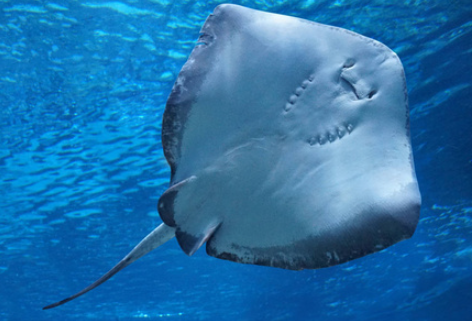
- While both are cartilaginous, rays have flattened bodies and their gill slits are located on the underside (ventral) of their bodies, whereas shark gill slits are on the sides.
- How do rays breathe while buried in the sand?
- Rays use spiracles, which are specialized openings on the top of their heads. These allow them to pull in oxygenated water and pass it over their gills without inhaling sand or debris from the bottom.
- Which is the largest species of ray?
- The Giant Oceanic Manta Ray (Mobula birostris) is the largest, with wingspans reaching up to 7 meters (23 feet) and weights exceeding 2,000 kilograms.
- How can divers safely interact with rays?
- Divers should maintain a respectful distance, avoid touching the animals, and never swim directly above a ray resting on the sand, as this can make them feel trapped and trigger a defensive response.
Reader boundary: This guide is for general editorial information only. Diving, marine-wildlife, environmental, lighting, electrical, appliance, plant-care, and home-installation topics should be checked against current standards, manufacturer instructions, local rules, and qualified professionals before practical use.