The deep sea remains one of the last true frontiers on Earth, a realm of perpetual darkness, immense pressure, and frigid temperatures. Yet, within this seemingly inhospitable environment, life has not only survived but evolved into forms of breathtaking complexity and ingenuity. These abyssal zones are home to creatures that challenge our understanding of biology, showcasing remarkable adaptations that seem drawn from science fiction. This guide delves into the lives of three such marvels: the Narwhal, often called the “unicorn of the sea”; the Lanternfish, a living beacon in the dark; and the Nautilus, a creature that has defied time itself. By examining their unique characteristics and survival strategies, we gain a profound appreciation for the evolutionary masterpieces thriving in the planet’s deepest corners.
The Narwhal: Unicorn of the Sea and Its Enigmatic Tusk
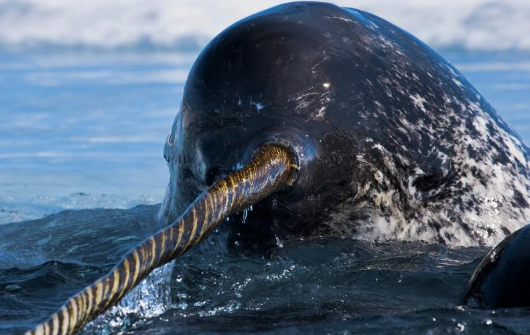
The Narwhal (Monodon monoceros) is an Arctic-dwelling whale that has captivated human imagination for centuries, primarily due to its single, long tusk. This iconic feature, which can grow up to 10 feet long, is not a horn but an elongated canine tooth that spirals counter-clockwise. For a long time, its true purpose was shrouded in mystery and folklore, with theories ranging from an ice-breaking tool to a weapon for dueling rivals. Modern science, however, has unveiled a far more sophisticated function.
Anatomy and Purpose of the Tusk
The narwhal’s tusk is a hydro-dynamic sensory organ of incredible sensitivity. Unlike most mammalian teeth, it lacks an outer layer of enamel, leaving thousands of tiny nerve endings on its surface exposed to the surrounding seawater. This intricate network of nerves connects directly to the narwhal’s brain, allowing it to detect subtle changes in its environment. Research has shown that the tusk can sense shifts in water temperature, pressure, and salinity. This capability is crucial for navigating the treacherous Arctic waters, finding breathing holes in the sea ice, and locating food sources like halibut and cod in the dark depths.
Sensory Organ or Weapon? Debunking the Myths
While the image of narwhals jousting with their tusks is dramatic, direct combat is not its primary function. The tusk is more of a high-tech sensor than a sword. It allows the narwhal to “taste” the chemical composition of the water, which helps it determine the salinity levels indicative of forming sea ice or locate prey. Males have been observed gently rubbing their tusks together, a behavior believed to be a form of communication or social ritual rather than aggression. While they may use it defensively against predators like orcas or polar bears, its main evolutionary advantage lies in its extraordinary ability to gather critical environmental data, making it one of the most unique sensory adaptations in the animal kingdom.

Lanternfish: Illuminating the Abyss with Bioluminescence
In the pitch-black of the mesopelagic zone (200 to 1,000 meters deep), light is a resource created by life itself. The Lanternfish (family Myctophidae) are masters of this art, representing one of the most abundant and ecologically vital groups of vertebrates on the planet. These small fish are named for their rows of light-producing organs, called photophores, that adorn their bodies. This ability to generate light, known as bioluminescence, is not just for show; it is a sophisticated toolkit for survival in a world without sun.
The Science Behind Bioluminescence
Bioluminescence in lanternfish is a chemical reaction. The photophores contain a compound called luciferin, which, when it reacts with oxygen in the presence of an enzyme called luciferase, produces light with very little heat. The fish has precise control over this process, allowing it to flash its lights in specific patterns. The arrangement, color, and number of photophores are unique to each species, acting like a biological barcode that helps them identify mates and rivals in the vast, dark expanse of the ocean.
How Lanternfish Use Light for Survival
The lanternfish’s use of light is a masterclass in deep-sea adaptation. Their strategies are multi-faceted and critical to their daily existence.
- Counter-illumination: Many predators in the deep sea hunt by looking up, searching for the silhouettes of prey against the faint light filtering from the surface. To combat this, lanternfish use the photophores on their bellies to produce a faint glow that matches the ambient light from above. This effectively erases their silhouette, making them nearly invisible to predators lurking below.
- Communication: The unique patterns of photophores allow lanternfish to signal to one another. This is essential for schooling behavior and for finding a mate of the same species in the darkness, preventing interbreeding and ensuring reproductive success.
- Predation and Defense: Some lanternfish use a bright flash of light to startle and disorient predators, giving them a precious moment to escape. Others may use a light near their mouth as a lure to attract smaller prey, turning their own bodies into a baited trap.

The Nautilus: A Living Fossil’s Journey Through Time
While many deep-sea creatures exhibit futuristic adaptations, the Nautilus is a relic from a distant past. This cephalopod is often called a “living fossil” because its distinctive coiled shell has remained virtually unchanged for over 500 million years, predating the dinosaurs. It is a direct descendant of the nautiloids, a group that dominated the ancient oceans. Its survival through multiple mass extinction events is a testament to an incredibly successful and resilient biological design.
An Unchanged Design for 500 Million Years
The Nautilus’s most striking feature is its external, multi-chambered shell. As the nautilus grows, it seals off its old living quarters and builds a new, larger one at the shell’s opening. These sealed-off chambers are connected by a thin tube called a siphuncle. This structure is the key to its survival, acting as a sophisticated buoyancy control device. By pumping gas and fluid into or out of these chambers, the nautilus can precisely control its depth, ascending to shallower waters at night to feed and descending to the safety of the deep during the day without expending much energy.
The Engineering Marvel of the Chambered Shell
The shell is not just for buoyancy; it is also an incredible piece of natural armor. It is strong enough to withstand the crushing pressures of the deep sea, typically at depths of 300 to 500 meters. This protection has allowed it to outlive its more agile, shell-less relatives like the octopus and squid when facing predators. Propulsion is achieved through jet propulsion—the nautilus draws water into its mantle cavity and expels it through a funnel, allowing it to move with surprising grace. This combination of armor, buoyancy control, and efficient movement has made its design timelessly effective.

Comparative Survival Strategies in the Deep Sea
The Narwhal, Lanternfish, and Nautilus, while all inhabitants of challenging marine environments, showcase vastly different evolutionary paths to success. Comparing their adaptations provides a broader understanding of the diverse solutions life has engineered to cope with darkness, pressure, and scarce resources. Each represents a unique answer to the fundamental questions of how to navigate, eat, communicate, and avoid being eaten in the deep ocean.
Physical vs. Biological Adaptations
The Nautilus and the Narwhal rely heavily on incredible physical adaptations. The Nautilus’s chambered shell is a marvel of biological engineering for pressure resistance and buoyancy, a design perfected hundreds of millions of years ago. The Narwhal’s sensory tusk is a highly specialized anatomical feature that transforms a tooth into a complex environmental sensor. In contrast, the Lanternfish’s primary tool is a biological process: bioluminescence. It manufactures its own light, a solution that is more about behavior and dynamic camouflage than static physical structure. This highlights two major evolutionary routes: perfecting a physical form versus mastering a biological process.
Feeding and Predatory Tactics Across Species
Their approaches to finding food also differ significantly. The Narwhal uses its tusk to sense gradients in the water to locate schools of fish in the murky Arctic depths, employing a sophisticated remote-sensing technique. The Nautilus, a more opportunistic scavenger and predator, uses its many tentacles to explore the seafloor for crustaceans and carrion, relying on its sense of smell. The Lanternfish employs a wider range of tactics, from forming massive schools to overwhelm prey to using light lures. Their daily vertical migration—ascending to food-rich surface waters at night and descending to the deep by day—is one of the largest mass movements of life on the planet and a key feeding strategy.
Frequently Asked Questions (FAQ)
- What is the narwhal’s tusk actually made of?
- The narwhal’s tusk is not a horn but a massively overgrown canine tooth made of dentin and cementum, just like other mammalian teeth. What makes it unique is its porous structure and the absence of an enamel coating, which exposes millions of nerve endings. This allows it to function as an incredibly sensitive organ that can detect changes in water pressure, temperature, and salinity.
- How does bioluminescence help lanternfish survive in total darkness?
- Bioluminescence is a multi-purpose survival tool for lanternfish. They use it for counter-illumination, where they light up their undersides to match the faint light from above, making them invisible to predators below. They also use species-specific light patterns for communication, helping them find mates and school together. Some also use light as a lure to attract prey or as a defensive flash to startle attackers.
- Why is the nautilus considered a “living fossil”?
- The nautilus is called a “living fossil” because its basic body plan, particularly its external, chambered shell, has remained remarkably unchanged for over 500 million years. It belongs to a lineage of cephalopods that were widespread in the Paleozoic Era. While its relatives either went extinct or evolved into modern squids and octopuses, the nautilus has persisted through multiple mass extinctions with its ancient design, making it a living window into Earth’s prehistoric oceans.
- What is the biggest challenge for animals living in the deep sea?
- The deep sea presents multiple extreme challenges, but the combination of immense hydrostatic pressure and the complete absence of sunlight are the most significant. The pressure can crush organisms not adapted to it, while the lack of light makes photosynthesis impossible, meaning the entire food web is based on energy trickling down from the surface (marine snow) or chemosynthesis. Animals must evolve specialized bodies to withstand the pressure and unique ways to navigate, hunt, and communicate in total darkness.
Reader boundary: This guide is for general editorial information only. Diving, marine-wildlife, environmental, lighting, electrical, appliance, plant-care, and home-installation topics should be checked against current standards, manufacturer instructions, local rules, and qualified professionals before practical use.