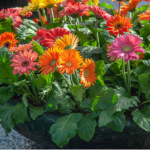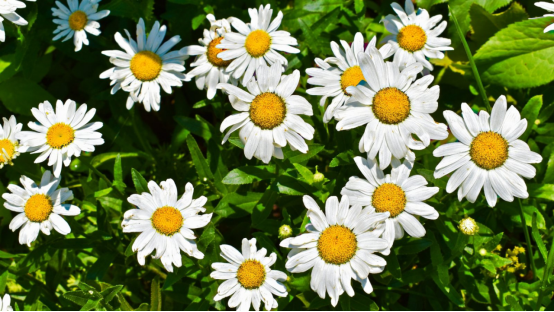
Daisies are so cute, and their flowers are soft and bright. Who doesn’t love them? But once the leaves of this lovely little thing turn yellow and droop, flower lovers immediately panic: Is it sick? Did I water it too much? Or did it get sunburned? In short, it’s heartbreaking.
Don’t worry, this little guide is not a high-brow science popularization, but is written for “temporary gardeners” like you who sweat in your palms. Let’s start with the symptoms, step by step to figure out the problem and prescribe the right medicine. Daisy can be saved.
Step 1: How did your daisy turn yellow?
The whole plant is turning yellow?
Most likely it is because the water is not managed properly, or it is not getting enough nutrients.
spots or spots on some leaves?
Insects or pathogens have come to visit.
Only the old leaves are yellowing?
It could be natural metabolism or a lack of nitrogen fertilizer.
Are the new leaves turning yellow or white?
The roots may not be healthy, or the plant may not have enough trace elements such as iron and zinc.
Leaf curling and wilting?
This could be a sign of fungus or sunburn.
Quick comparison: Five main reasons why daisy leaves turn yellow
| question | Phenomenon | Whose fault is it? |
| Watering out of control | Leaves turn yellow, roots rot or dry out | Watering too much or forgetting to water |
| Malnutrition | The leaves become lighter in color and the old leaves turn yellow first | Nitrogen deficiency or iron deficiency |
| Pests and diseases | There are black spots/wormholes/white powder | Spider mites, aphids, fungi |
| Wrong lighting | Burnt edges or leaves become thin and yellow | Excessive sunlight or lack of light |
| Soil issues | The root system is not developed and the plant is not energetic | The soil is too compacted, the acidity and alkalinity are not right |
Step 2: First aid method, “rescue” according to the situation
① Watering for emergency
What to do if it’s too wet?
Stop watering. Move the flower pot to a vent to dry. If it’s serious, just change the soil, cut off the rotten roots and plant again.
What to do if it’s too dry?
Don’t flood it. Use the “immersion method”: soak the flower pot in shallow water for 15 minutes, allowing it to slowly drink up.
How to judge whether to water or not?
Poke your finger two or three centimeters into the soil – if it is wet, leave it alone, and water it again if it is dry.
② If the nutrition is not enough, feed the baby quickly!
Yellowing is caused by nitrogen deficiency:
use some diluted quick-acting nitrogen fertilizer (such as urea water) every week and watch the color of the new leaves slowly recover.
New yellow leaves may be due to iron deficiency:
you can spray ferrous sulfate water, but not too concentrated, to avoid burning the roots.
Afraid of chemical fertilizers? Use kitchen waste:
soak ripe banana peels in water, egg shell powder, fermented kitchen waste water, slow but safe.
③ Bugs and germs, you’re welcome!
Red spider mites:
Look at the back of the leaves. Are there red dots and webs? Rinse with water first, then spray with neem oil.
Powdery mildew:
baking soda + water + a drop of dishwashing liquid, spray the leaves. Increase ventilation!
Aphids:
Spray with soapy water for three days, and cut off the leaf if the problem is serious.
④ Light and temperature adjustment
Ideal sunlight:
Daisies love sunlight, but don’t overexpose them. About 6 hours a day is just right, and you can shade them at noon in summer.
What about the temperature?
18~25℃ is the most comfortable. Below 10℃, it will wilt easily; above 30℃, it will pant.
Step 3: From now on, don’t let the problem come back
Watering rhythm
Be more diligent in summer and touch the soil every day.
If you’re a little lazy in the winter, just do it once a week.
If you have the conditions, it would be great to use drip irrigation.
Soil maintenance
Change the soil every year and mix it with some leaf mold, coconut coir and perlite.
The pH should be controlled between 6.0 and 6.5, try it with test paper.
Weekly physical checklist
Check the back of the leaves to see if there are any bugs, threads or yellow spots.
How many times have you applied fertilizer? Keep a record to avoid over-fertilization and root burn.
Three questions most often asked by flower lovers
Q: Should I cut off the yellow leaves?
A: If they are all yellow, cut them off to save nutrients. If they are still a little green, don’t rush and wait and see.
Q: How long does it take to see the effect after the rescue?
A: 7 to 14 days to see if new leaves emerge. If so, it means the plant has been rescued.
Q: Is it more difficult to grow daisies indoors?
A: Yes, poor ventilation and insufficient light. Use LED lights + open windows to save the day.
Final Reminder
Daisies are not the synonym of “delicate and difficult to grow”, they are just a little sensitive. As long as you pay attention to their little signals and don’t be too cold or hot, they will bloom to your surprise. If you really save a pot of dying daisies, why not tell your story – we all love to hear “resurrection” legends.