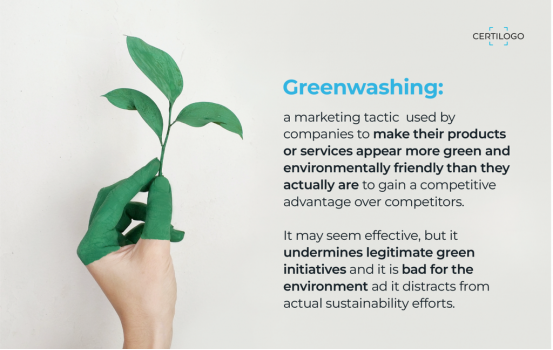
Understanding Greenwashing: The Deceptive Art of Eco-Friendly Claims
In an era increasingly defined by environmental consciousness, consumers are actively seeking products and services that align with their values of sustainability and ecological responsibility. This rising demand has unfortunately given birth to a pervasive and misleading practice known as greenwashing. Greenwashing refers to the deceptive marketing strategy employed by companies to present themselves or their products as environmentally friendly, sustainable, or ethical, when in reality, their claims are unsubstantiated, exaggerated, or outright false. The term, coined in 1986 by environmentalist Jay Westerveld, initially highlighted the deceptive “save the towel” campaigns by hotels, which, while seemingly eco-conscious, primarily aimed at reducing laundry costs rather than genuinely conserving resources.
The core essence of greenwashing lies in its ability to exploit consumer goodwill and the desire to make responsible choices. By creating an illusion of environmental stewardship, companies can gain a competitive edge, enhance brand reputation, and even charge premium prices, all without necessarily making significant, verifiable improvements to their environmental footprint. This practice not only misleads consumers but also undermines genuine efforts by truly sustainable businesses, creating skepticism and eroding trust in the broader green market.
The Historical Context and Evolution of Greenwashing
While the term “greenwashing” emerged in the late 20th century, the practice of making misleading claims about environmental benefits has historical precedents. Early industrial marketing often downplayed pollution or highlighted minor improvements to distract from larger environmental damages. As environmental movements gained traction in the 1970s and 80s, corporate responses often involved superficial gestures rather than fundamental operational changes. Today, greenwashing has evolved with digital marketing, social media, and complex supply chains, making it more sophisticated and harder to detect. Companies now leverage intricate narratives, vague certifications, and selective disclosure to paint a misleading picture of their environmental performance.
The “why” behind greenwashing is multifaceted. It’s driven by a combination of competitive pressures, regulatory loopholes, and the immense financial rewards associated with tapping into the growing market of eco-conscious consumers. For many corporations, investing in genuine sustainability can be costly and complex, requiring fundamental shifts in production processes, supply chains, and resource management. Greenwashing offers a seemingly easier, cheaper alternative to reap the benefits of a “green” image without the deep commitment.

The Psychology and Motivations Behind Greenwashing
Understanding the ‘why’ behind greenwashing requires delving into corporate psychology, market dynamics, and consumer behavior. Companies engage in greenwashing not out of a desire to genuinely harm the environment, but primarily to serve strategic business objectives, often at the expense of environmental integrity. The motivations are complex, ranging from financial incentives to reputation management and competitive positioning.
Financial Incentives and Market Demand
The most prominent driver of greenwashing is financial gain. As consumer awareness of climate change, pollution, and resource depletion grows, so does the demand for environmentally responsible products. Studies consistently show that a significant percentage of consumers are willing to pay more for sustainable brands. This creates a powerful economic incentive for companies to appear green. By making superficial environmental claims, brands can attract this lucrative segment of the market without incurring the often substantial costs associated with truly sustainable practices, such as redesigning products, overhauling supply chains, or investing in renewable energy infrastructure. The short-term gains from greenwashing can be significant, making it an attractive, albeit unethical, strategy.
Reputation Management and Risk Mitigation
Beyond direct sales, a company’s environmental reputation plays a crucial role in its overall brand image and stakeholder relations. Negative environmental press, protests, or legal challenges can severely damage a brand, leading to decreased sales, investor flight, and difficulties in recruiting talent. Greenwashing can serve as a proactive or reactive reputation management tool. By presenting an eco-friendly facade, companies can deflect criticism, appease environmentally concerned investors, and improve public perception. This strategy can also act as a form of risk mitigation, reducing the likelihood of regulatory scrutiny or consumer boycotts.
Competitive Advantage and Regulatory Pressure
In competitive markets, differentiation is key. An “eco-friendly” label can distinguish a product from its competitors, even if the environmental benefits are minimal or non-existent. This perceived advantage can sway purchasing decisions, especially when consumers are faced with similar products. Furthermore, increasing governmental regulations and international agreements related to environmental protection exert pressure on industries to demonstrate compliance and responsibility. Greenwashing can be a way for companies to appear to meet these expectations without fully committing to the spirit of environmental stewardship, often exploiting loopholes or vague guidelines.
Decoding Common Greenwashing Tactics: A Detailed Analysis
Greenwashing manifests in various forms, often employing subtle psychological tricks and misleading language to obscure the truth. Identifying these tactics is the first step towards becoming a more discerning consumer. Here, we break down the most common greenwashing strategies, offering an in-depth analysis of how they work and what to look out for.
The Seven Sins of Greenwashing (Expanded)
TerraChoice, an environmental marketing firm, identified “The Seven Sins of Greenwashing,” which remain highly relevant today:
- 1. Sin of the Hidden Trade-off:
- This occurs when a product is proclaimed “green” based on a narrow set of attributes without attention to other significant environmental impacts. For instance, paper made from sustainably harvested forests might still involve considerable energy, water, and chemical use in its processing. The “why” here is to cherry-pick the best-looking aspect while ignoring the broader, more damaging picture.
- Tips for Detection: Look beyond a single claim. Does the company provide full lifecycle assessment data? Are other, less favorable aspects of production or disposal omitted from the marketing?
- 2. Sin of No Proof:
- Making an environmental claim without providing accessible, verifiable supporting information or third-party certification. Examples include “all-natural” or “eco-friendly” labels without any data or seals to back them up. The motivation is to leverage the positive connotations of green terms without the burden of evidence.
- Tips for Detection: Demand proof. If a claim sounds too good to be true, it likely is. Search for certifications, reports, or scientific studies on the company’s website or independent sources.
- 3. Sin of Vagueness:
- Using broad, undefined terms that lack specific meaning, such as “all-natural,” “eco-friendly,” “green,” or “sustainable.” These terms are subjective and can be interpreted in many ways, making it impossible to verify the claim. This tactic banks on consumers’ general positive associations with such words.
- Tips for Detection: Question ambiguous claims. What exactly makes it “natural” or “eco-friendly”? If the company can’t provide specific, measurable details, it’s likely vague.
- 4. Sin of Irrelevance:
- Highlighting an environmental claim that is technically true but unimportant or unhelpful for consumers seeking genuinely green products. For example, a product claiming to be “CFC-free” when CFCs have been banned for decades, or “phosphate-free” when phosphates are not present in that product category. This is designed to create a false sense of environmental achievement.
- Tips for Detection: Understand regulations. Is the claim simply stating compliance with existing laws? If so, it’s not going above and beyond.
- 5. Sin of Lesser of Two Evils:
- Claiming a product is “green” compared to other, even worse products in the same category, thereby distracting from the inherent unsustainability of the product category itself. Organic cigarettes or “fuel-efficient” SUVs are classic examples. The underlying product may still be environmentally damaging.
- Tips for Detection: Consider the industry. Is the “green” claim relative to an inherently unsustainable sector? This requires a broader perspective on consumption.
- 6. Sin of Fibbing:
- Making outright false environmental claims, such as falsely claiming to be certified by a reputable environmental organization, or fabricating data. This is the most egregious form of greenwashing.
- Tips for Detection: Verify certifications and data directly with the stated organization or through independent research. Look for news reports of past deception.
- 7. Sin of Worshiping False Labels:
- Creating or using fake certification labels that resemble legitimate third-party seals but have no real meaning or oversight. These labels often feature green imagery (leaves, globes) to appear authentic.
- Tips for Detection: Research any unfamiliar eco-label. Reputable certifications (e.g., Energy Star, USDA Organic, Fair Trade Certified) have public standards and lists of certified products/companies.
Empowering Consumers: A Practical Guide to Identifying Greenwashing
Navigating the labyrinth of green claims can be challenging, but equipping yourself with the right strategies can empower you to make truly sustainable choices. Here’s a practical guide to becoming a greenwashing detective:
A Checklist for Evaluating Environmental Claims
- Look for Specifics, Not Vague Terms: Does the claim use precise, measurable language (e.g., “50% recycled content,” “carbon neutral certified by [organization]”) or vague terms like “eco-friendly” and “natural”? Specifics are key.
- Demand Evidence and Transparency: Is there data, reports, or third-party certifications readily available to back up the claim? Companies committed to sustainability are usually transparent about their processes and impacts.
- Check for Reputable Certifications: Familiarize yourself with well-known and credible environmental certifications (e.g., B Corp, LEED, Cradle to Cradle, Forest Stewardship Council – FSC). Be wary of made-up labels or those that are difficult to verify.
- Consider the Entire Lifecycle: Think about the product’s journey from raw material extraction to disposal. Does the company address impacts at all stages, or only focus on one minor “green” aspect?
- Research the Company’s Overall Record: Does the company have a history of environmental violations or controversies? Do their other products or business practices align with their green claims? A single “green” product from a heavily polluting company might be a red flag.
- Beware of Green Imagery Without Substance: Lots of green leaves, earth symbols, or nature imagery on packaging without concrete environmental claims can be a visual greenwashing tactic.
- Read the Ingredients List: For products like cleaning supplies or cosmetics, scrutinize ingredient lists for harsh chemicals, artificial fragrances, or unsustainable components, regardless of “natural” claims on the front.
| Characteristic | Genuine Eco-Friendly Practice | Common Greenwashing Tactic |
|---|---|---|
| Claims | Specific, measurable, verified (e.g., “50% post-consumer recycled plastic,” “Energy Star certified”) | Vague, unsubstantiated (e.g., “eco-friendly,” “all-natural,” “green”) |
| Evidence | Transparent data, third-party certifications, lifecycle assessments, public reports | No proof, internal “studies,” unverified self-declarations |
| Focus | Holistic approach, addresses multiple environmental impacts (e.g., energy, water, waste, sourcing) | Single, minor positive attribute, ignores major negative impacts (hidden trade-off) |
| Certifications | Reputable, recognized third-party seals (e.g., USDA Organic, FSC, B Corp) | Fake labels, generic “eco” symbols, self-created seals |
| Company Behavior | Consistent commitment across operations, continuous improvement, ethical supply chain | Inconsistent, isolated “green” products, history of environmental issues |
| Transparency | Open about challenges, provides detailed product information, clear contact for questions | Hides information, uses jargon, difficult to find specific details |
The Far-Reaching Impact and Future of Combating Greenwashing
The consequences of greenwashing extend far beyond misleading individual consumers. This deceptive practice has detrimental effects on the environment, consumer trust, and the integrity of the sustainable market as a whole.
Environmental Damage and Misallocation of Resources
Perhaps the most critical impact of greenwashing is its contribution to ongoing environmental degradation. When consumers are tricked into buying products that are not genuinely sustainable, they inadvertently support industries and practices that continue to harm the planet. This misallocation of purchasing power means that truly eco-conscious businesses struggle to gain traction, while resources are diverted to less sustainable alternatives. It also delays meaningful corporate action, as companies can maintain a positive public image without investing in genuine environmental improvements.
Erosion of Consumer Trust and Market Distortion
Repeated exposure to greenwashing leads to cynicism and distrust among consumers. When people discover they’ve been misled, they become skeptical of all environmental claims, even those made by legitimate sustainable brands. This “green fatigue” makes it harder for genuine eco-friendly products to stand out, stifling innovation and growth in the sustainable sector. It distorts the market by creating an unfair competitive advantage for companies that prioritize superficial marketing over substantive change.
The Role of Regulation, Technology, and Consumer Activism
Combating greenwashing requires a multi-pronged approach. Regulatory bodies worldwide are beginning to crack down on misleading environmental claims, introducing stricter guidelines and penalties. For instance, the European Union has proposed new directives to ban generic environmental claims like “environmentally friendly” without proof. Technology, such as blockchain for supply chain transparency and AI for analyzing corporate claims, also offers promising tools for verification. Ultimately, informed consumer activism remains a powerful force. By demanding transparency, supporting genuine brands, and reporting suspicious claims, consumers can collectively push for greater corporate accountability and drive real environmental change.
Expert Advice: Navigating the Green Market with Confidence
As a consumer committed to making responsible choices, navigating the green market can feel like a minefield. Here’s some expert advice to help you cut through the noise and identify genuine sustainability:
- Adopt a “Show Me, Don’t Tell Me” Mindset: Don’t just accept claims at face value. Actively seek out the evidence. If a company claims carbon neutrality, ask how they achieve it, what offsets they use, and if it’s third-party verified.
- Prioritize Impact Over Buzzwords: Instead of focusing on vague terms like “natural,” think about the actual environmental impact. Is the product durable? Is it repairable? What is its end-of-life plan? A long-lasting, repairable item, even if not labeled “natural,” might be far more sustainable than a short-lived “natural” alternative.
- Support B Corporations and Certified Brands: Look for businesses that have undergone rigorous third-party certification processes like B Corp, which assesses a company’s entire social and environmental performance, not just one product. These certifications indicate a deeper commitment to sustainability.
- Educate Yourself on Key Environmental Issues: Understanding basic environmental science and common industry practices will make you better equipped to spot inconsistencies or irrelevant claims. For example, knowing about microplastics helps you scrutinize “biodegradable” plastic claims.
- Engage with Brands: Don’t hesitate to ask companies direct questions about their environmental practices via social media, email, or customer service. A truly sustainable brand will welcome the opportunity to share information.
- Consider the “Less is More” Principle: The most sustainable choice is often to consume less. Before buying, ask if you truly need the item, and if there are options for borrowing, repairing, or buying second-hand.
Frequently Asked Questions (FAQ)
- What is the primary goal of companies engaging in greenwashing?
- The primary goal of companies engaging in greenwashing is to enhance their brand image, attract eco-conscious consumers, and gain a competitive edge by appearing environmentally responsible, often without making genuine and substantial commitments to sustainability. This helps them increase sales, improve public relations, and potentially avoid stricter regulations, all while minimizing the costs associated with true environmental stewardship.
- How can I easily spot a fake environmental certification label?
- To spot a fake environmental certification label, always look for specific details and transparency. Genuine certifications usually have a clear name, a website, and publicly accessible criteria and lists of certified products or companies. If a label looks generic, uses only vague “green” imagery (like leaves or globes), or doesn’t lead to verifiable information upon a quick online search, it’s likely a false or self-made label designed to mislead.
- Does greenwashing only apply to physical products, or can it affect services too?
- Greenwashing applies to both physical products and services. Companies offering services, such as airlines, energy providers, or financial institutions, can also engage in greenwashing by making misleading claims about their carbon footprint, renewable energy usage, or sustainable investment portfolios without sufficient evidence or genuine operational changes. It’s crucial to scrutinize service claims with the same skepticism as product claims.
- What are the long-term consequences of widespread greenwashing for the environment?
- Widespread greenwashing has severe long-term consequences for the environment. It misdirects consumer purchasing power away from genuinely sustainable solutions, inadvertently supporting environmentally damaging practices. This stifles innovation in true green technologies, delays meaningful corporate action on climate change and pollution, and ultimately contributes to the acceleration of environmental degradation by creating a false sense of progress and responsibility.
- As a consumer, what is the most effective action I can take against greenwashing?
- The most effective action a consumer can take against greenwashing is to become an informed and critical shopper. This involves researching claims, demanding transparency and proof from brands, supporting third-party certified products, and advocating for stronger regulations. By consciously choosing genuine sustainable options and publicly questioning misleading claims, consumers collectively create market pressure that forces companies to adopt more authentic environmental practices.
Reader boundary: This guide is for general editorial information only. Diving, marine-wildlife, environmental, lighting, electrical, appliance, plant-care, and home-installation topics should be checked against current standards, manufacturer instructions, local rules, and qualified professionals before practical use.